Palantyr – The Ascent / The Hunger (Mini-Album Review) Live in Oberhausen, 2025 – Reviewed after Keep It True madness
Palantyr, France's rising force of female-fronted heavy metal, unleash The Ascent / The Hunger—a fierce, myth-soaked mini-album filled with speed, storytelling, and blackened fury. After catching their explosive live set in Oberhausen, I dove deep into their latest release—and it’s one hell of a ride. Read my full review, from Conan deserts to Nosferatu nightscapes.
HEAVY METALEPIC METALMETAL-REVIEWSFRONT PAGESPEED METAL
Mörtel
5/1/20257 min read
Palantyr – The Ascent / The Hunger (Mini-Album Review)
Live in Oberhausen, 2025 – Reviewed after Keep It True madness
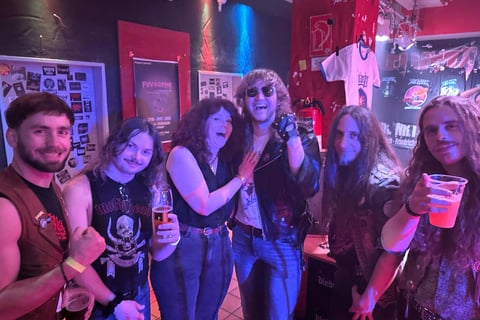
Still catching my breath after the total sonic annihilation that was Keep It True 2025 (25th anniversary edition!) and a gig straight after, I finally sat down to gather my thoughts and unleash a review worthy of the band I saw ripping the stage apart just a few days ago: Palantyr. I caught them live on Hyenas Europe Tour stop in Oberhausen, and after hanging out with the band and experiencing their raw energy firsthand, there was no way I wasn’t going to write about their mini-album. I’ve already penned the official promotional blurb over at Jawbreaker Records (here's the link), but what follows here is a more personal dive into the fires of their sound—just like I did with Templar. You’ll find familiar quotes but also new insight and perspective shaped by the live encounter.
So, who the hell is Palantyr—and why should you care?
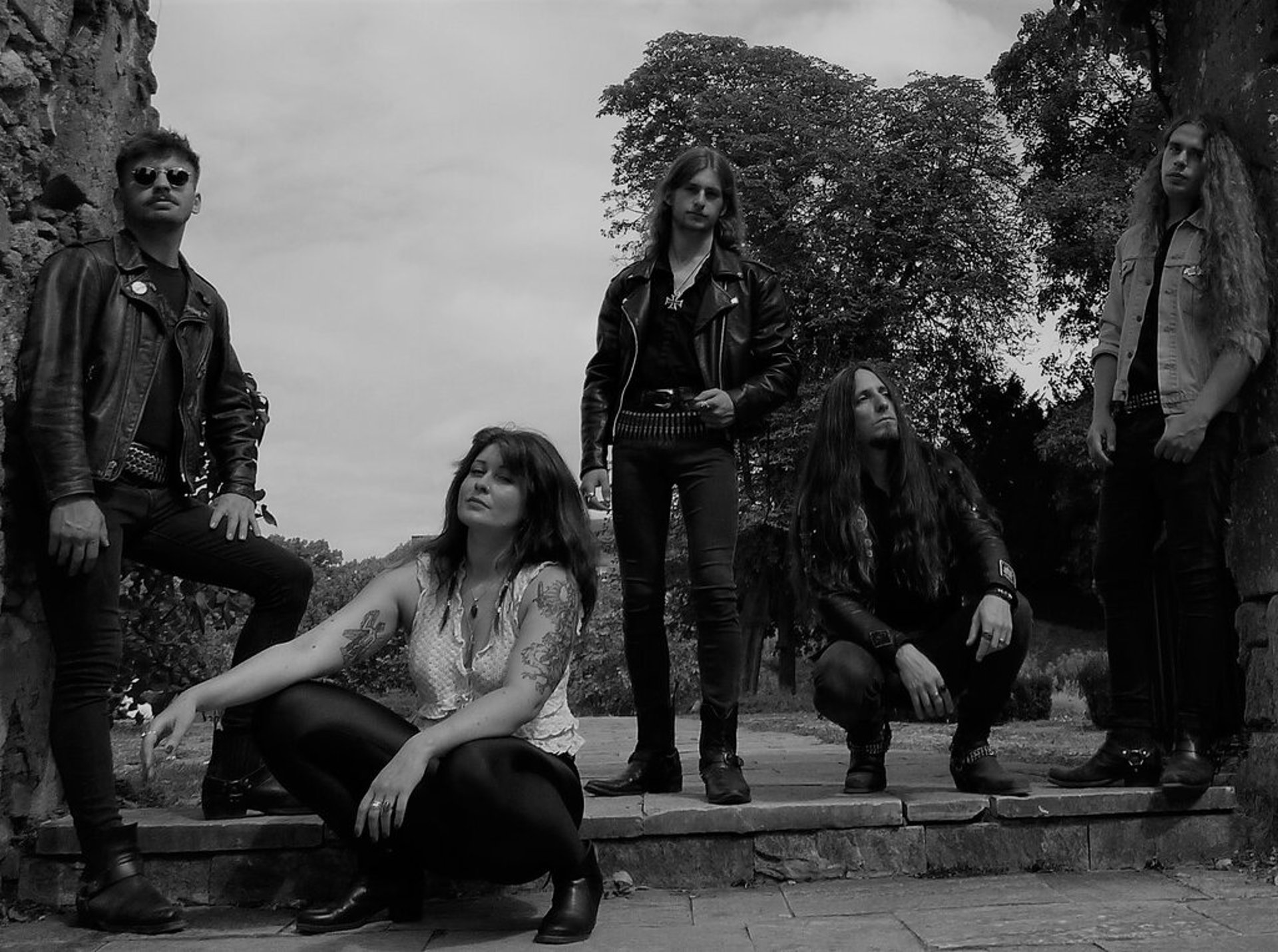
Born in 2014 in Thionville, France under the name Destrukt, the band sharpened their steel in the underground for years. Palantyr might sound like some obscure Tolkien deep cut—and honestly, you're not far off. The name is likely a riff on the Palantír—those all-seeing stones used for distant vision and ominous communication, like the ones Sauron creeped on in Lord of the Rings. Fitting, considering this band sees far and delivers even further.They dropped a live album in 2017 and a full-length titled Unleash the Destruktors in 2018—with a male frontman at the time. But 2022 was the year things truly began to shift: Athena stepped up to the mic, and the transformation to Palantyr began in earnest. By 2024, the band embraced a new identity and new warriors, with Ravenheart (guitar, tracks 1–3) passing the torch to Odysseus (tracks 4–6). The band’s been through more member changes than a cursed mercenary guild, but what emerged is a lineup that now stands strong:
T. Karburator – Rhythm Guitar (2014–present)
Y. Deathripper – Drums (2016–present)
L. Krossbones – Bass (2022–present)
Athena – Vocals (2022–present)
Odysseus – Lead Guitar (2024–present)
Yeah, I know—I tend to go on about band history, but I live for this kind of lore. Let’s talk sound.
The Sound of Palantyr – forged in fire, sharpened with steel
Over the past few years, there’s been a noticeable rise in the number of traditional heavy metal bands led by powerful female vocalists—and I’m all in for it. There’s a certain fire and freshness these voices bring to a genre that’s long been dominated by testosterone and grit, and Palantyr is a shining example of how it can be done right.
Athena's vocal delivery is a full-force battle cry—effortless yet commanding, fierce yet melodic. Her range and presence both on record and live are undeniable, cutting through the instrumentation like a blade of starlit steel. The band doesn’t try to reinvent the genre, but what they do is blend their influences into something sharp, coherent, and exciting. You can hear shades of Mystik’s wild speed, the epic scope of Smoulder, and the raw metal urgency of bands like Blood Star, Tower, and Iron Griffin.
The result? A potent mix of traditional metal, laced with speed and high fantasy. Riffs gallop, drums thunder, bass lines snarl, and through it all, there's an undercurrent of something mystical—like you're hearing the soundtrack to a forgotten sword & sorcery saga (mostly lyrically speaking).
While they’re still carving out their place in the scene, their sound already shows a sense of identity and clarity that many more seasoned bands still struggle to find. With a few more shows and releases under their belt, I wouldn’t be surprised if we start hearing their name pop up a lot more in conversations about the current wave of underground heavy metal.
Let's rip into the songs!
Kicking off the EP is Shan-e-Sorkh, a track whose title alone already sets the tone—meaning “The Great Red Waste,” it's a deep-cut reference from the Hyborian Age of Conan the Barbarian. This isn’t just fantasy window-dressing. If you dig into the lore, Shan-e-Sorkh is a scorched, desolate land near Iranistan, a place of sun-bleached death, red sands, and nomadic savagery. The kind of place only a madman—or a heavy metal band—would willingly step into.
That’s exactly what this song feels like. The atmosphere builds slowly, almost lulling you into a false sense of calm—Athena’s voice is steady, deliberate, like a prophet’s warning. Then the sandstorm hits: the riffs pick up, the drums start pounding like war drums echoing off canyon walls, and the bass roars like some monstrous beast rising from the dunes. It’s not just a song—it’s a hostile landscape painted in riffs, rhythm changes, and a steadily mounting tension that finally breaks like a sandstorm overtaking a caravan. The storytelling isn’t limited to the lyrics; it’s woven into every tempo shift, every dynamic peak.
Broken Mirror shifts toward a more epic, mid-paced terrain. Still fast in parts, but with more breathing room thanks to some well-placed twin-guitar interplay. The track walks the line between speed metal and NWOTHM, and while the mix leans a bit more into rawness (especially the vocals), that edge gives it personality. It’s less polished, more primal.
The EP’s closing track from the “Ascent” side, Son of the White Mare, might be my favorite of the entire first half—and it’s not just because of the musical execution. This song dives into the realm of Hungarian mythology, referencing either the legendary 1981 animated film Fehérlófia or its folkloric source material. It tells the tale of a supernaturally strong hero, born from a white mare, who descends into the underworld to slay dragons and rescue princesses.
You couldn’t ask for more metal subject matter if you tried.
Musically, this track is the culmination of everything Palantyr does well. Fast-paced riffage? Check. Galloping rhythms? Check. Twin guitars? Absolutely. But it’s the moment when everything quiets down—when Athena’s voice turns almost ethereal in a melancholic ballad section—that chills creep down your spine. This section is especially powerful live, where the band holds the tension for what feels like eternity. You can feel the audience holding their breath, caught between stillness and the anticipation of the storm returning. And when it does return—when the battle cry reemerges and the full band crashes back in—it’s a glorious, soaring finale that seals the EP’s first half with heroic grandeur.
Ravenous opens with medieval mystique. Acoustic guitars and faint keys transport you to a hidden cave—moody, mysterious, and inviting danger. But don’t get too comfortable: before long, you’re caught in a mid-tempo gallop that screams Iron Griffin and Smoulder. The solos duel, the hooks sink in, and it’s a refreshing pivot after the speed of The Ascent.
Nosferatu is one of those rare covers that doesn’t feel like a cover at all. Originally written by Paul Roland, the gothic rock eccentric whose discography is full of literary references, baroque arrangements, and Victorian morbidity, Palantyr took his version and turned it completely on its head.
When I spoke with Athena and T. Karburator after their set, they shared their mutual love for Paul Roland’s work—especially Death or Glory, which Karburator personally recommended to me. (And I’ll pass that torch along: if you haven’t heard it yet, go check it out – Death or Glory – Paul Roland). That track, and Roland’s style in general, clearly had a deep influence on their take.
But here’s the kicker: their arrangement of Nosferatu was thrown together in four to five hours—and it rips. What was once a moody gothic ballad now flies on speed-metal wings, with a charging rhythm and a chorus built for shouting from the pit. NOSFERATUUU!! It’s infectious, it’s tight, and it’s an homage that completely owns its transformation. I love when a band takes a song and makes it theirs, and Palantyr nailed it.
The final track of The Hunger—and the mini-album as a whole—is Graveyard, and it’s an absolute beast. Much like Son of the White Mare closes the first half with a triumphant bang, Graveyard brings things full circle with a scorched-earth assault that still manages to carry a great sense of structure and pacing.
What starts off as a mid-to-fast tempo track with Athena’s now-signature soaring vocals and tight riffing begins to escalate subtly over time, layer by layer. There’s a kind of sinister tension built into the track—it’s relentless, yes, but never overwhelming. The instrumentals keep tightening, coiling like a serpent until the final minute or so where things truly begin to spiral into chaos. That’s when Palantyr dives headfirst into early blackened speed metal territory—blistering tremolo riffing, blast beats, and a level of aggression we haven’t seen this fully unleashed elsewhere on the album. It's not the foundation of the whole song, but rather its climax, making it hit that much harder.
And just when you think they might let it burn out in fury, they swerve into something entirely unexpected: an acoustic outro that gently lowers you back to earth. It’s subtle but deeply effective—a moment of reflection after the onslaught. It reminded me of what Triumpher did with Storming the Walls, using acoustic motifs to both bookend the album and create a cyclical feeling. But here, it doesn’t just return us to where we began—it brings us somewhere else entirely, like waking from a dream, or exiting a battlefield with the smoke still rising behind you. A powerful, thoughtful close to a mini-album that constantly surprises without ever losing its heavy metal core.
Final thoughts?
I’ve never been one to slap arbitrary numbers onto albums. Palantyr doesn’t need a score—they need your attention. Their mini-album The Ascent / The Hunger is a raw, passionate, carefully constructed journey. And beyond the music, I have to say—these folks are just downright lovely people. After seeing them live and having the chance to talk with them, especially Athena and T. Karburator, it became even clearer how much passion and sincerity they put into their craft. If you ever get the opportunity to catch them live—do it. Grab a CD here or here - it's out now, on 2nd of May - happy release day! A patch, a shirt (hopefully in XL next time so I can finally snag one myself, haha), and if they have the time, have a chat with them. They’re more than happy to share stories, swap recommendations (like Paul Roland’s Death or Glory, thank you Karburator!), and connect with fans in the most genuine way.
I’m already looking forward to seeing them again at KIT Rising—and if this mini-album is just the beginning, I can’t wait to see where the Palantyr takes us next.